Wayly
Designated Driver & Shared Ride App
A mobile app designed to help users book verified designated drivers and safer shared rides.
Project Overview
Wayly is a mobile app concept that combines two transportation services: designated driver booking and shared long-distance rides. The app helps users book verified drivers to operate their own vehicles safely, while also offering a more affordable and trust-focused shared ride option for city-to-city travel.
This project focuses on improving trust, safety, pricing transparency, and user confidence during transportation decisions.
Project Type
Mobile app concept
My Role
UX research, wireframing, visual design, prototyping, usability testing
Tools
Figma
The Problem
Many transportation apps help users get from one place to another, but they do not fully address situations where users need both themselves and their own car to arrive safely. At the same time, shared long-distance rides can feel affordable but uncertain because users may not know enough about the driver, other riders, pricing, or safety conditions before booking.
Wayly was designed to explore how one mobile app could support both verified designated driver bookings and safer shared ride experiences.
User Research
To understand transportation pain points, I conducted user interviews with people who had experience with late-night rides, long-distance travel, carpooling, or concerns about safety and pricing.
1. Trust is the biggest barrier
Key Insights
Users wanted to know more about the driver before booking, including identity verification, driving experience, background checks, reviews, and safety history.
2. Users need pricing clarity
Participants wanted to see the full price before confirming a ride, including service fees and whether the price was per seat or total.
3. Shared rides need emotional comfort
For shared rides, users cared not only about price, but also about who else would be in the car, language comfort, ride atmosphere, and driver communication.
4. Safety tools increase confidence
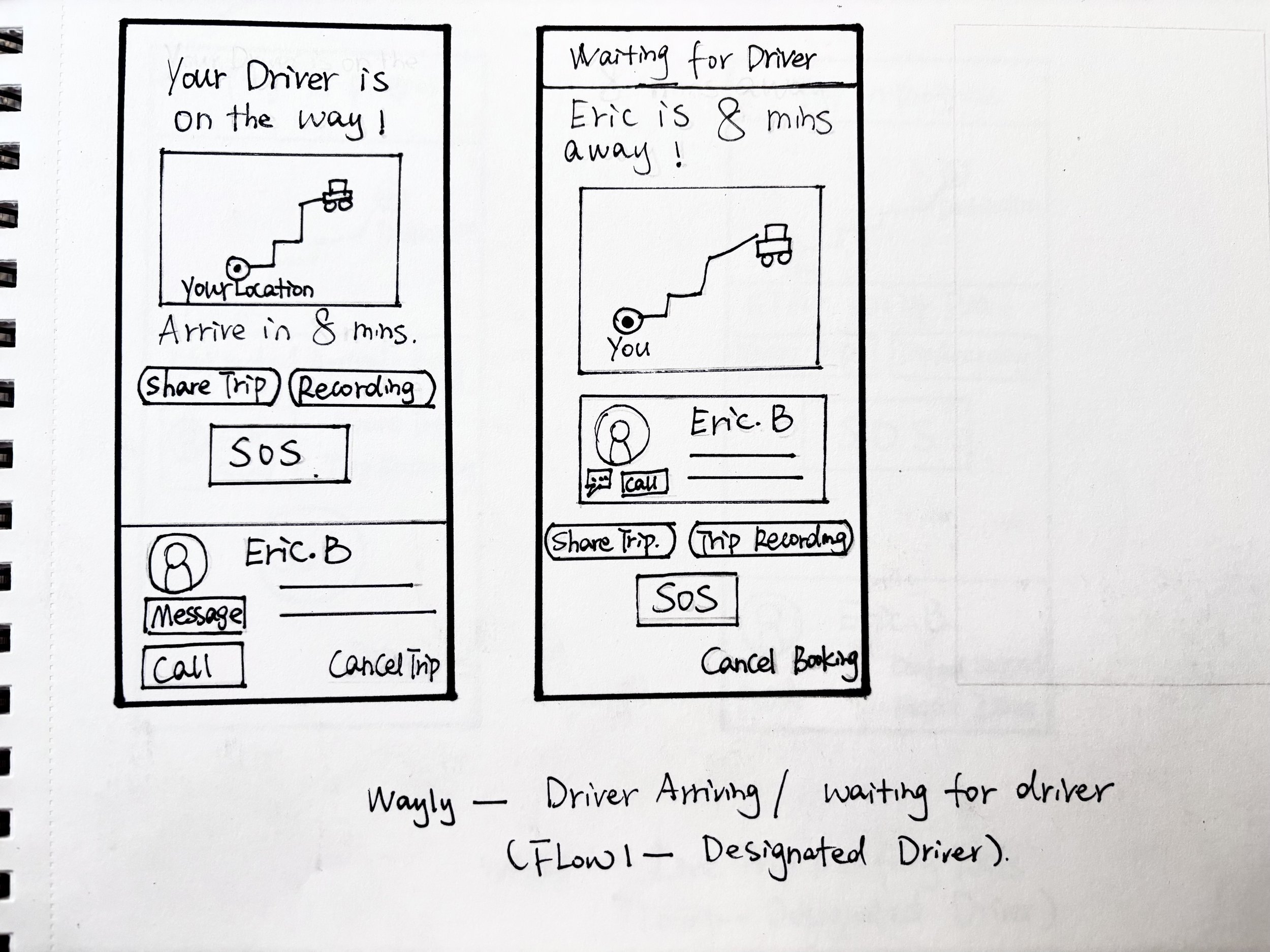
Users expected safety features such as live tracking, trip sharing, emergency support, and clear driver contact options.
Persona
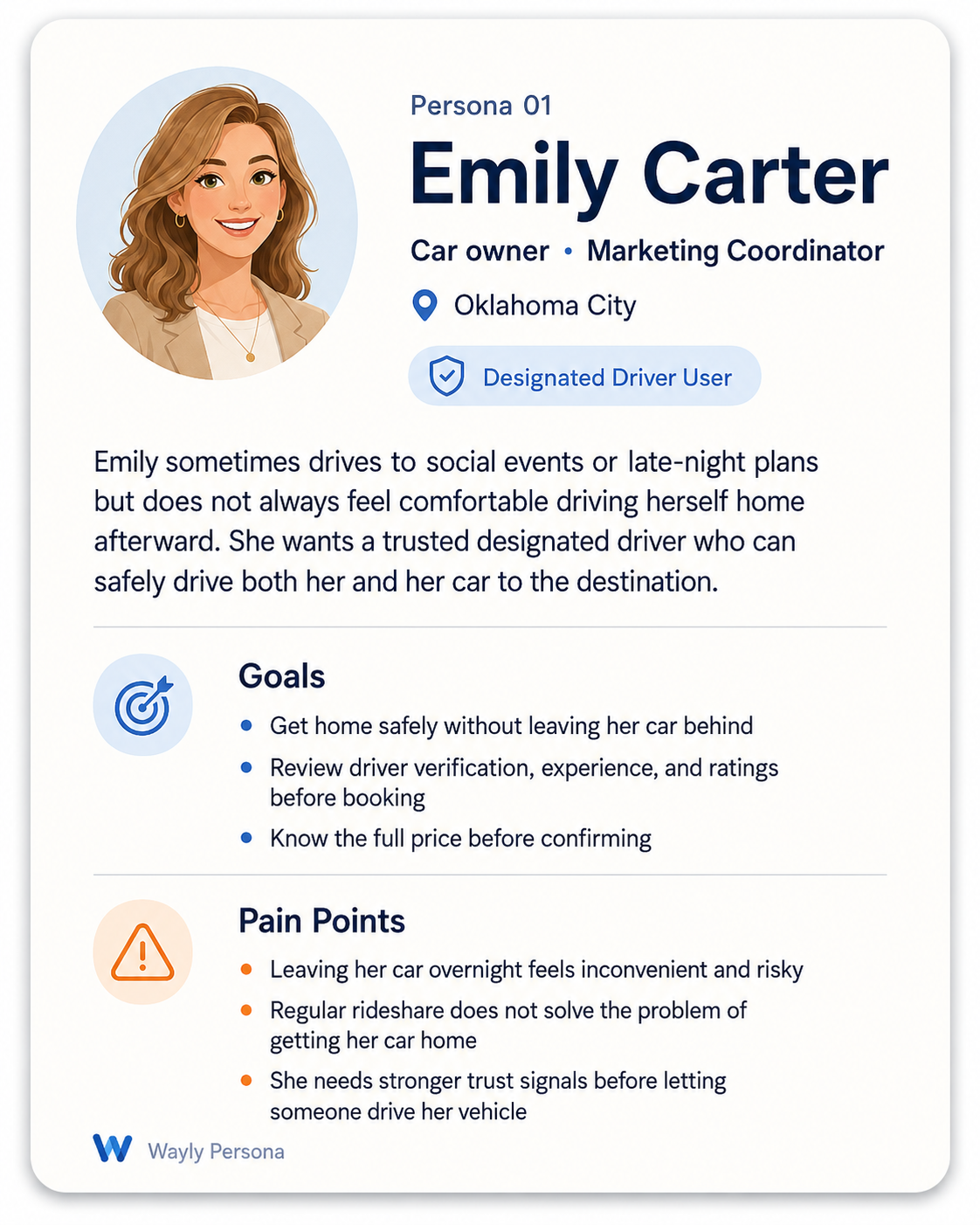
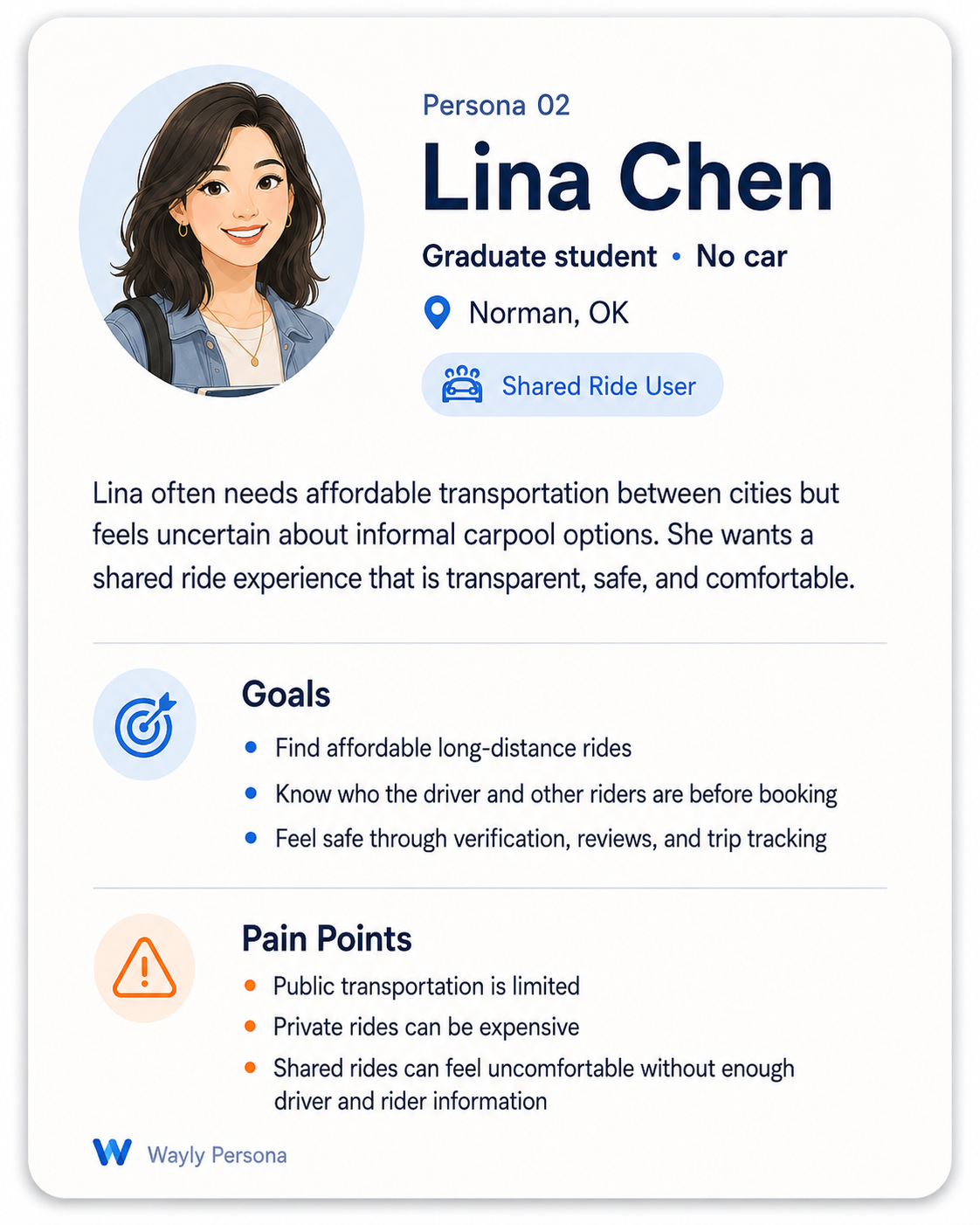
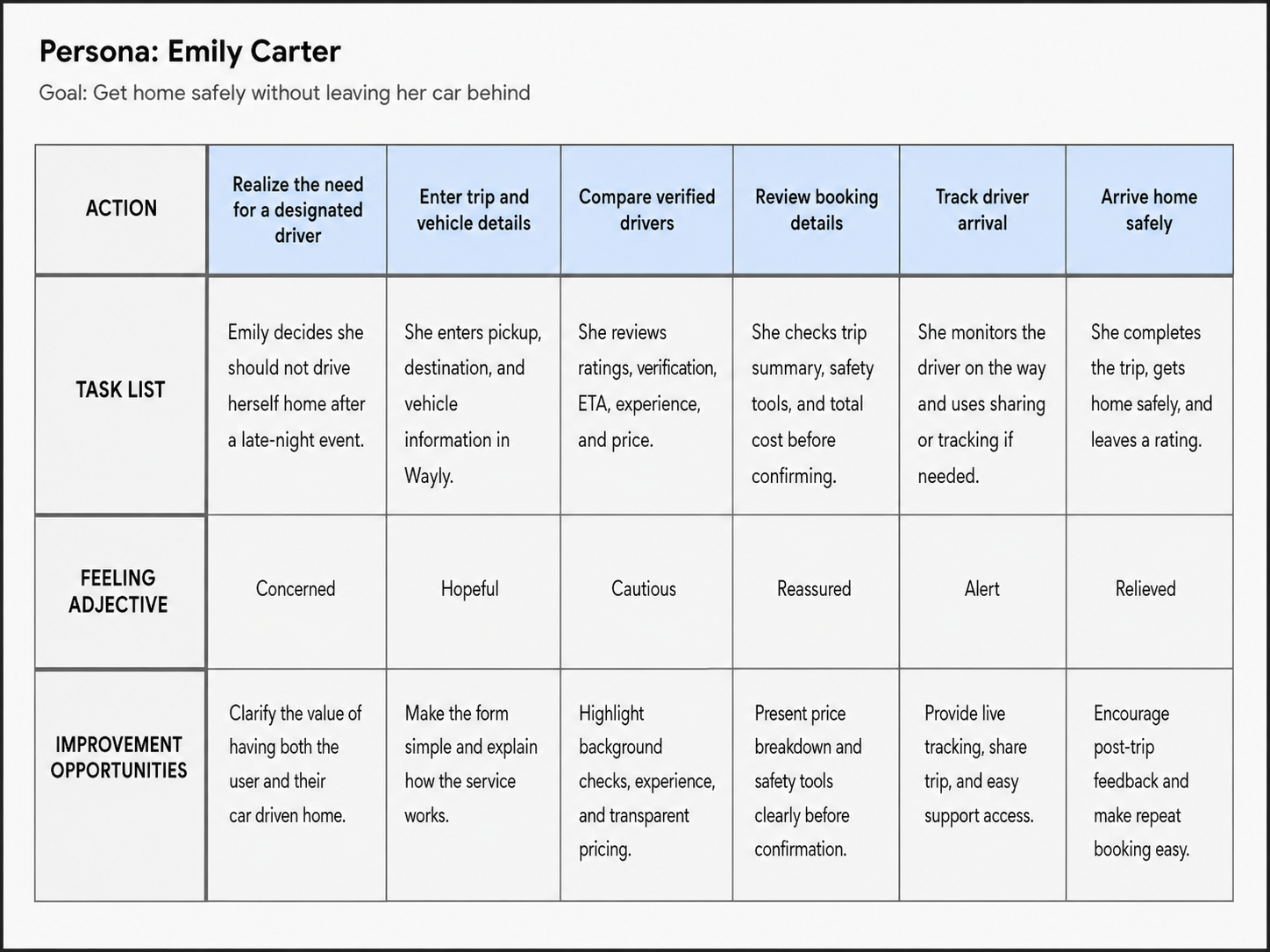
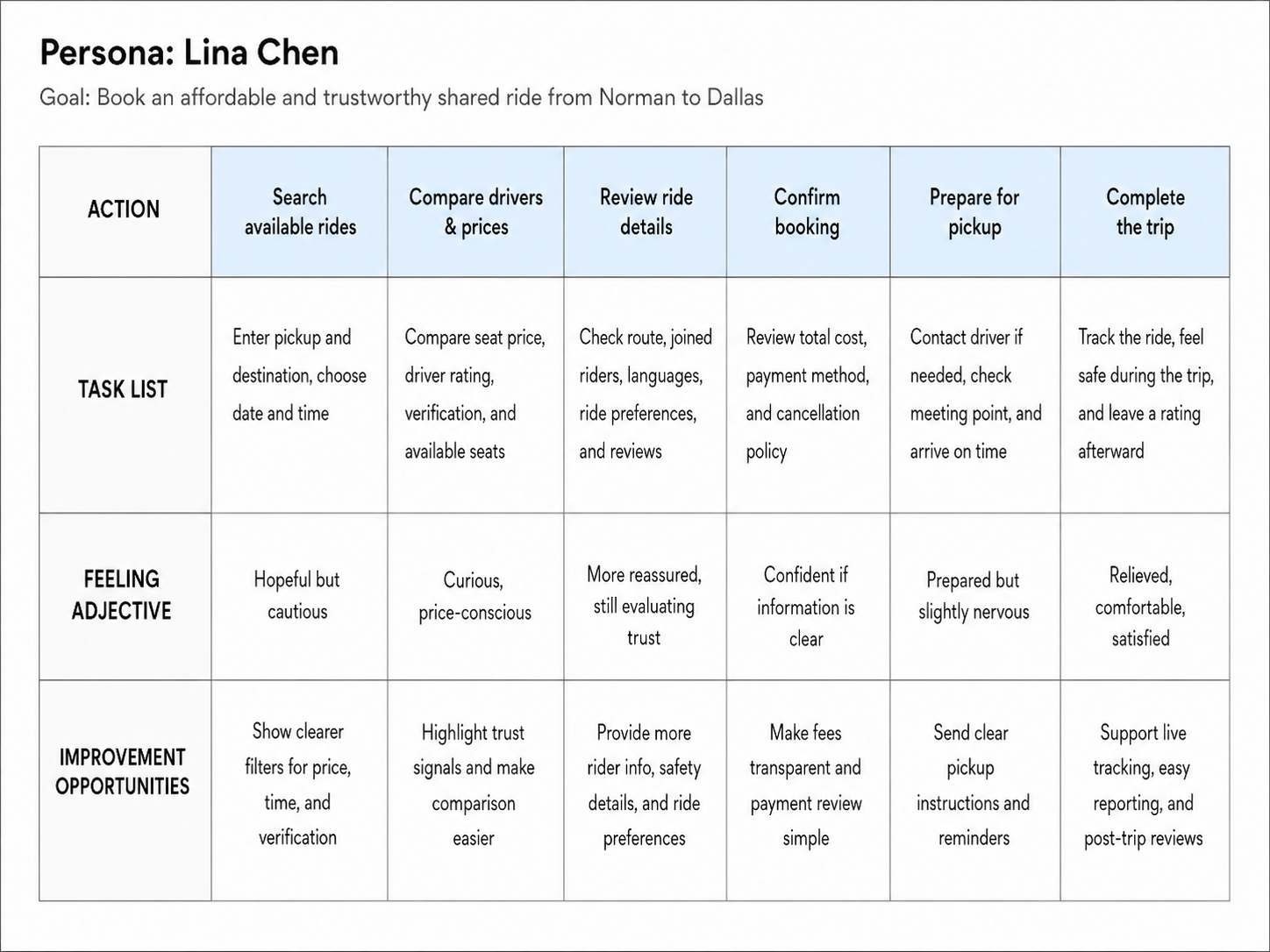
Based on the interview findings, I created two personas to represent Wayly’s two core user needs: booking a designated driver and finding a safer shared ride.
User Journey Map
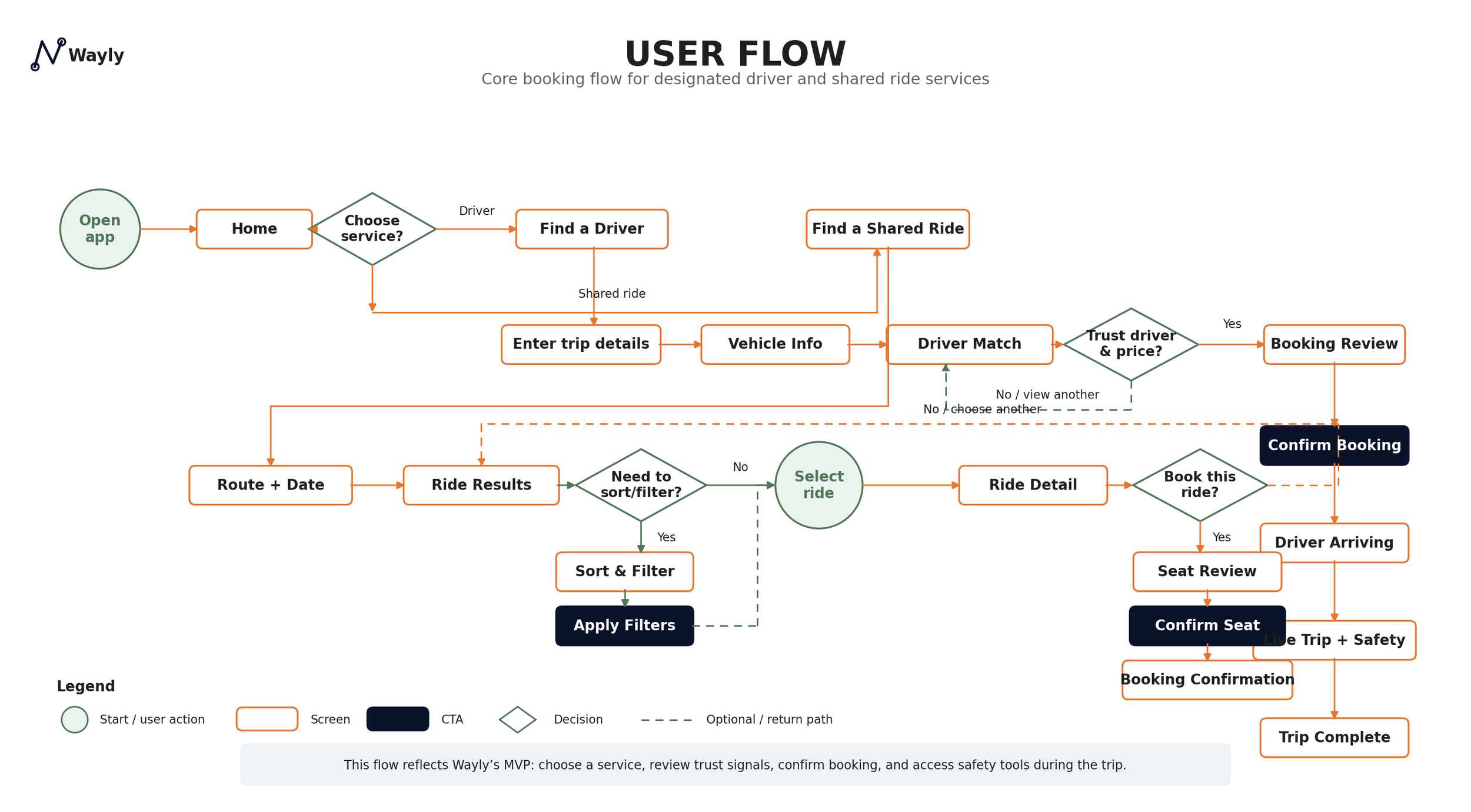
User Flow
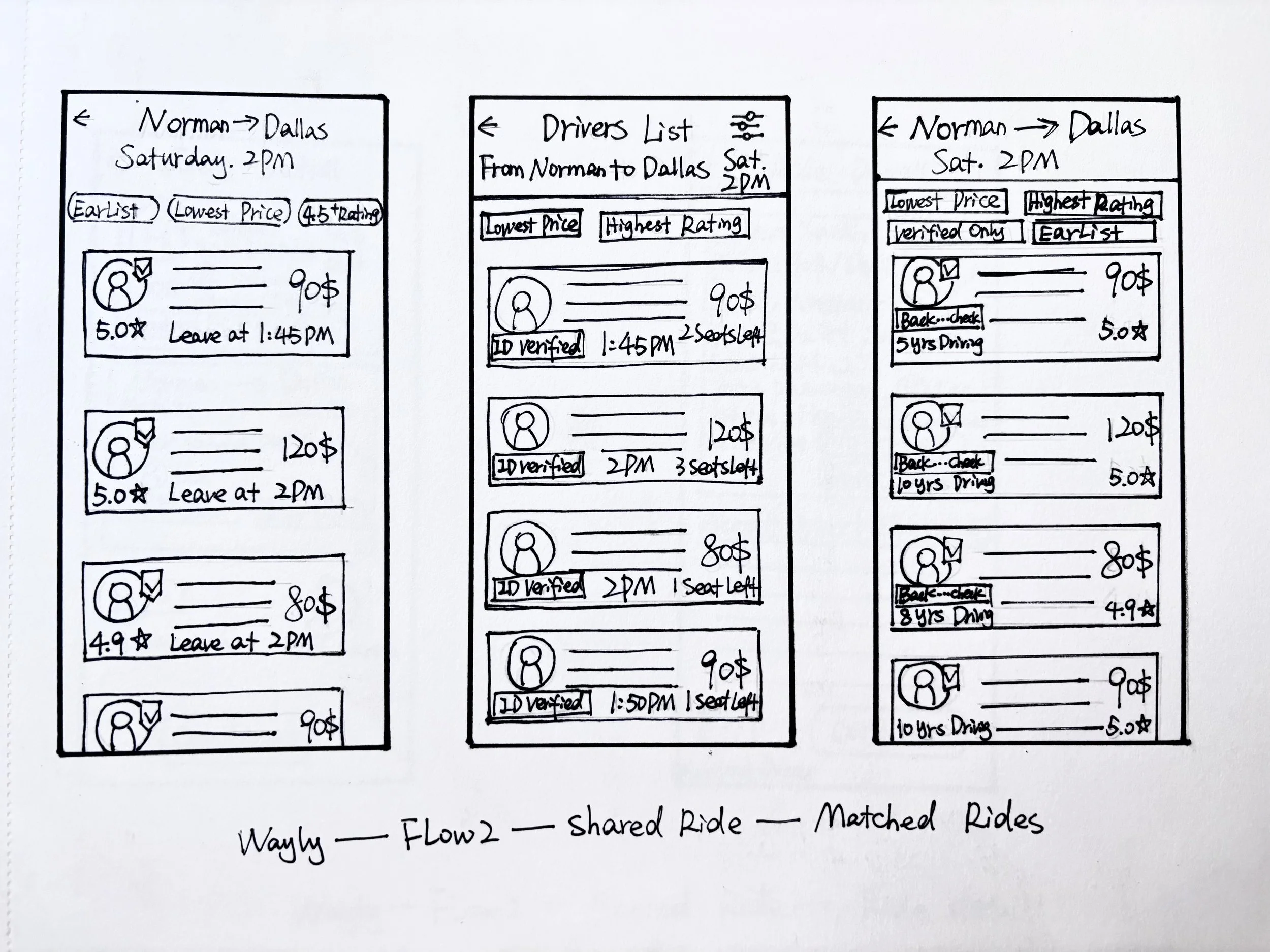
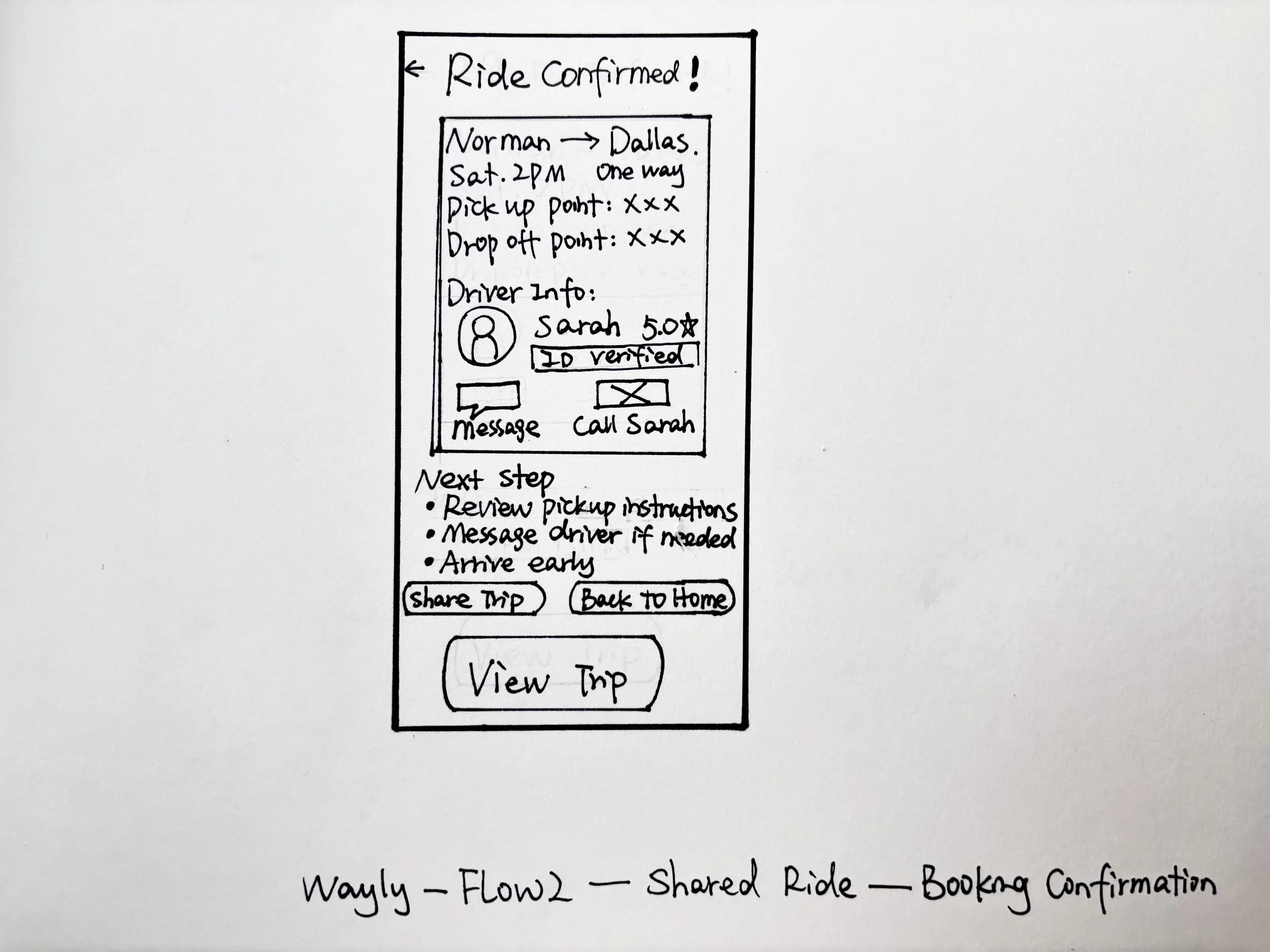
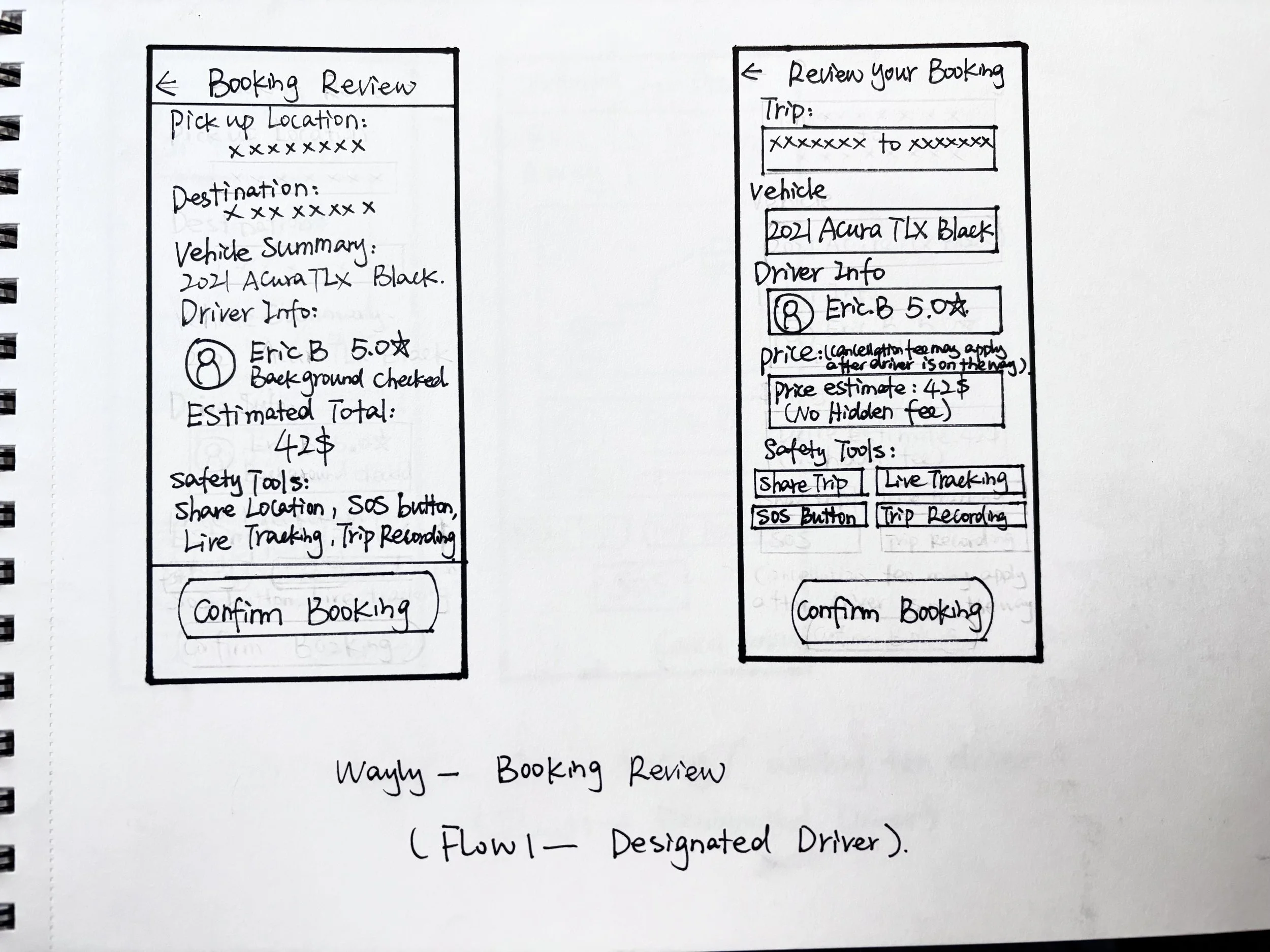
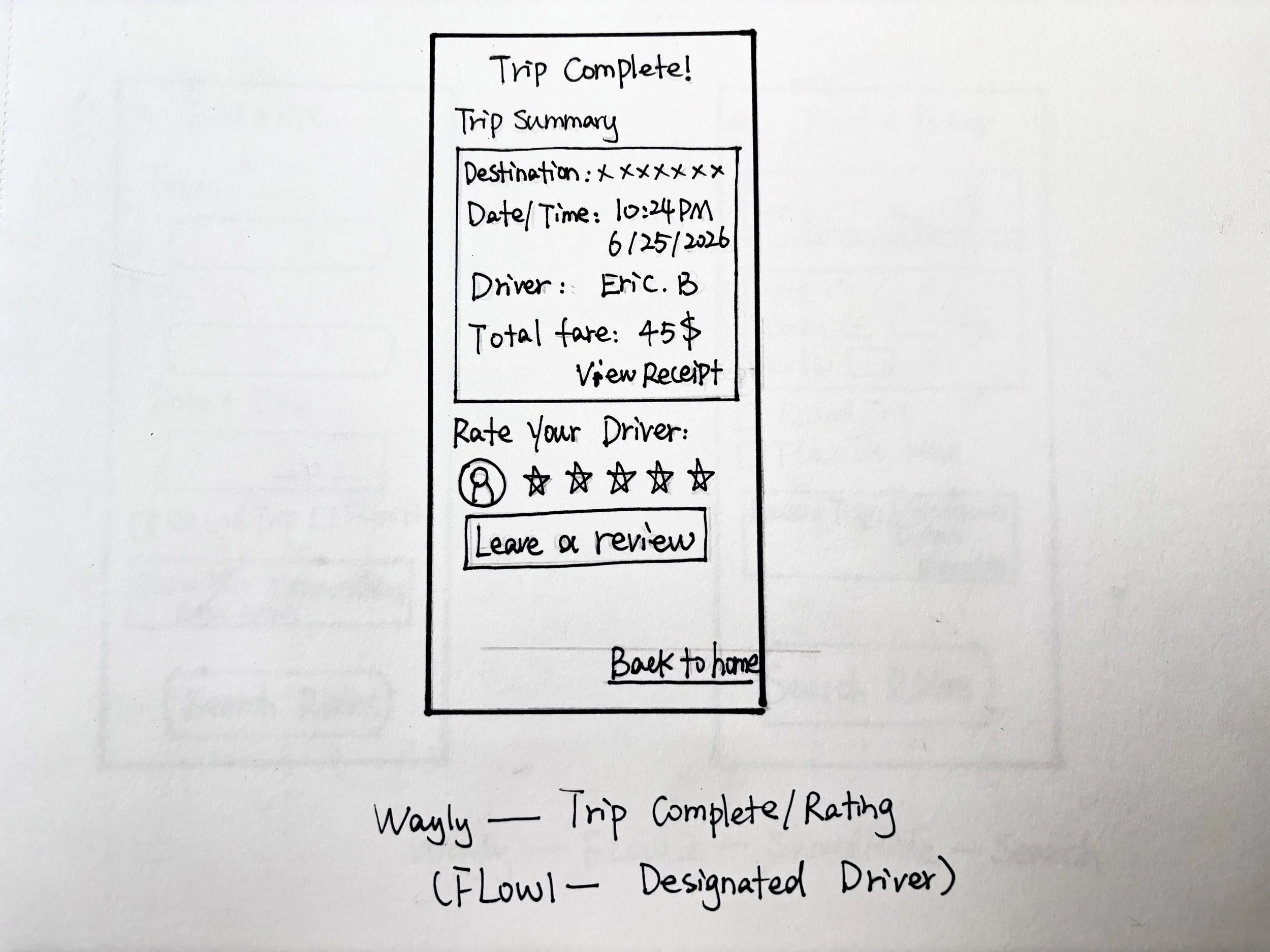
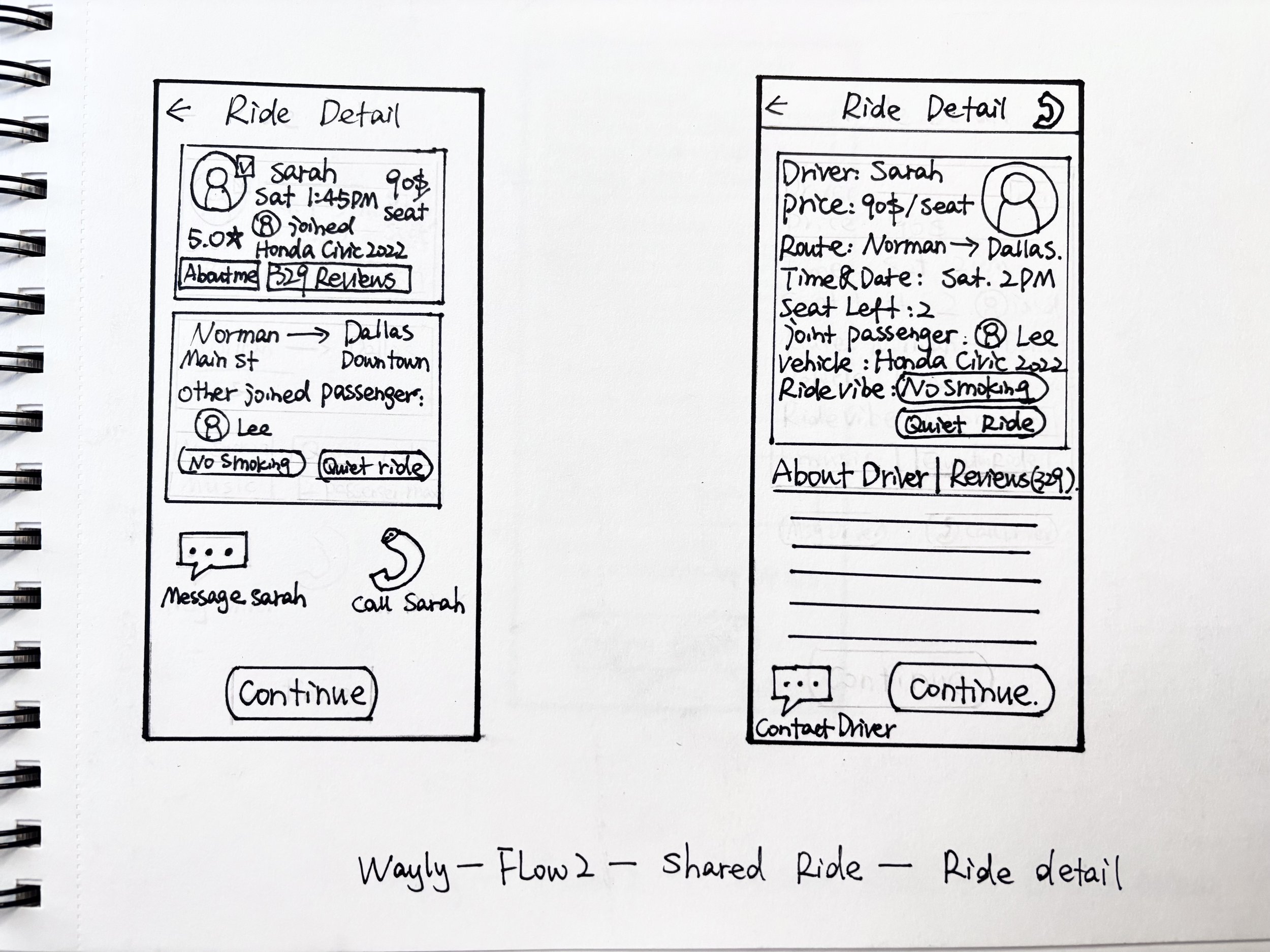
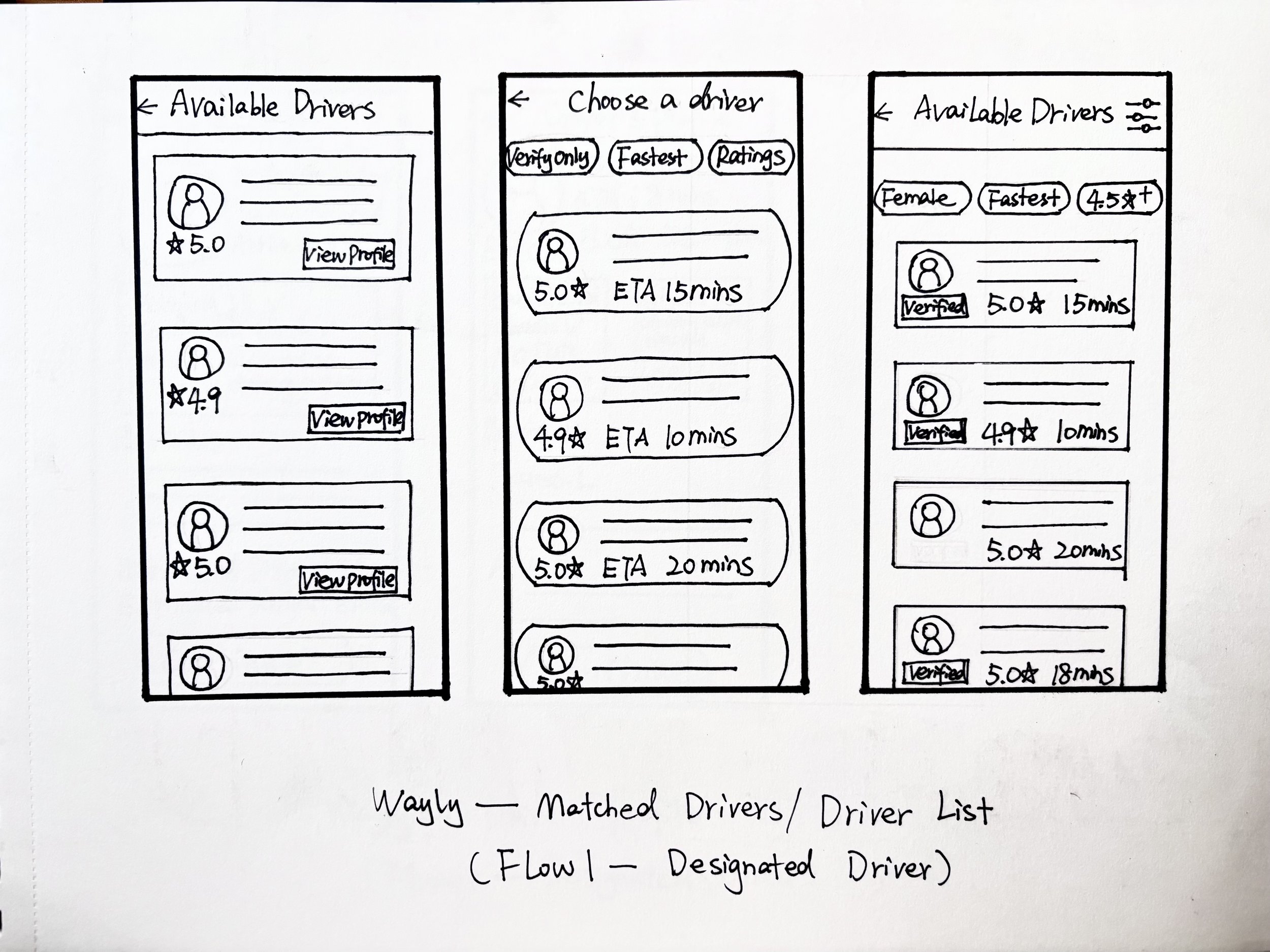
Paper Wireframes:
Wireframes
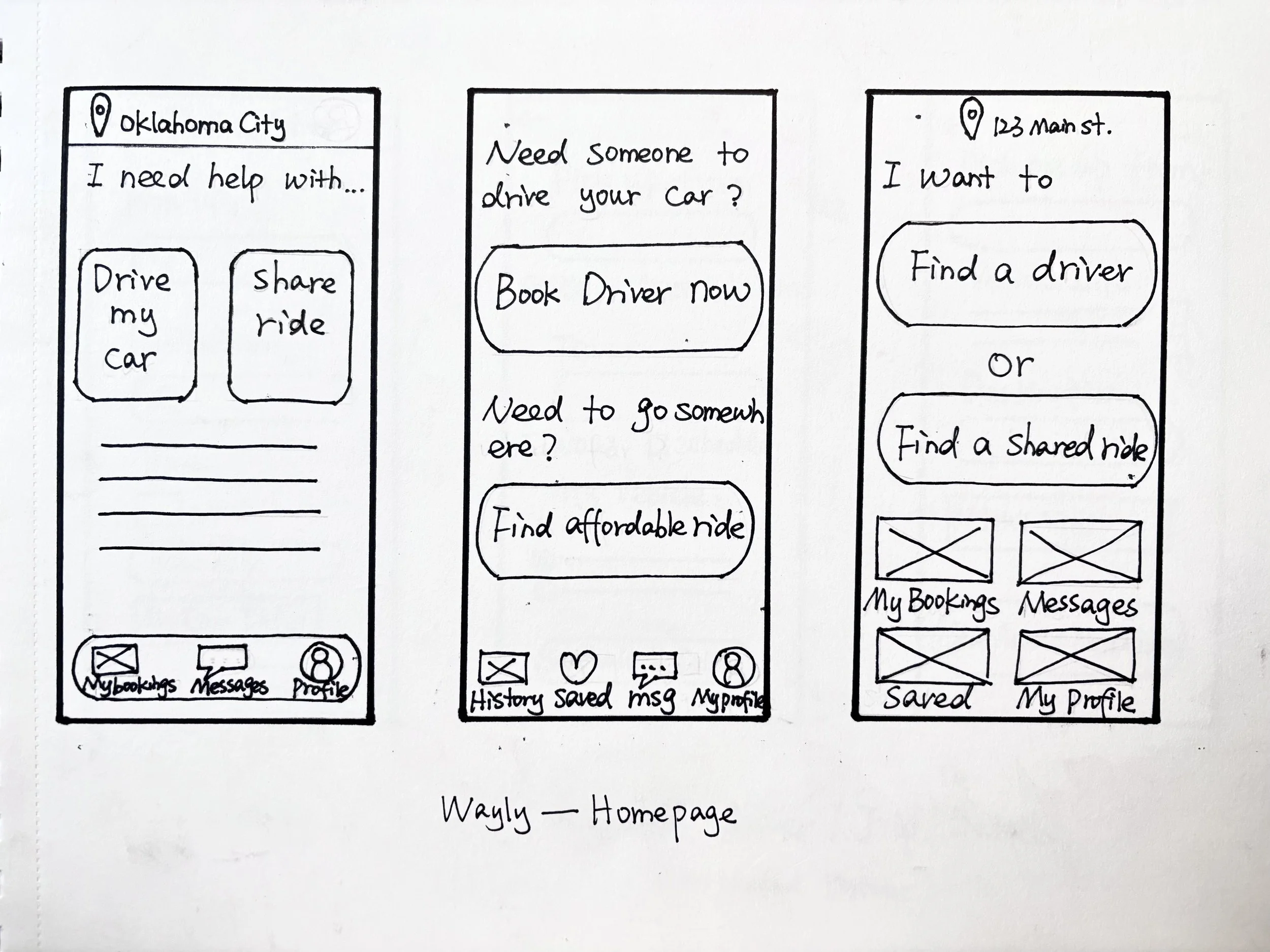
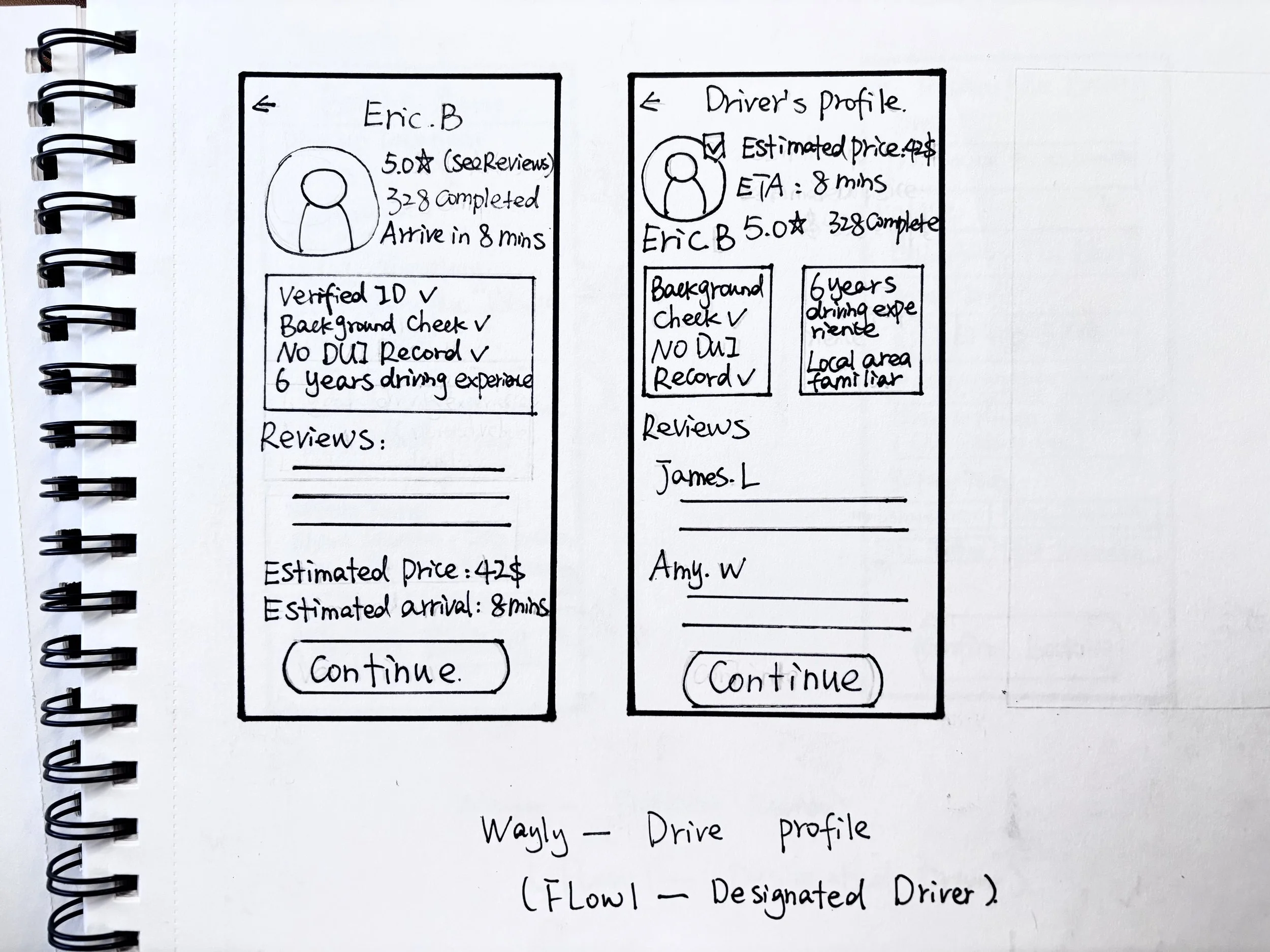
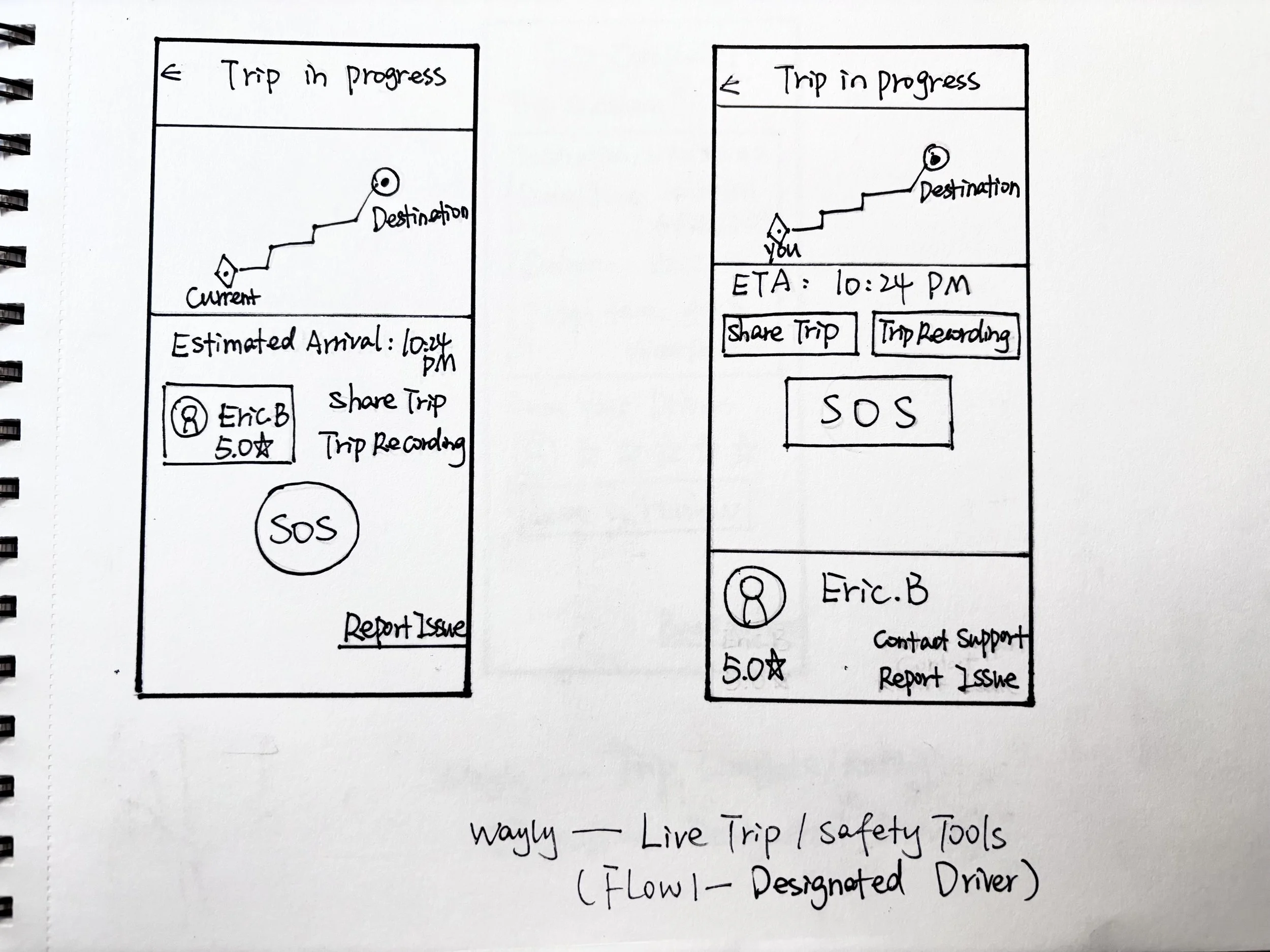
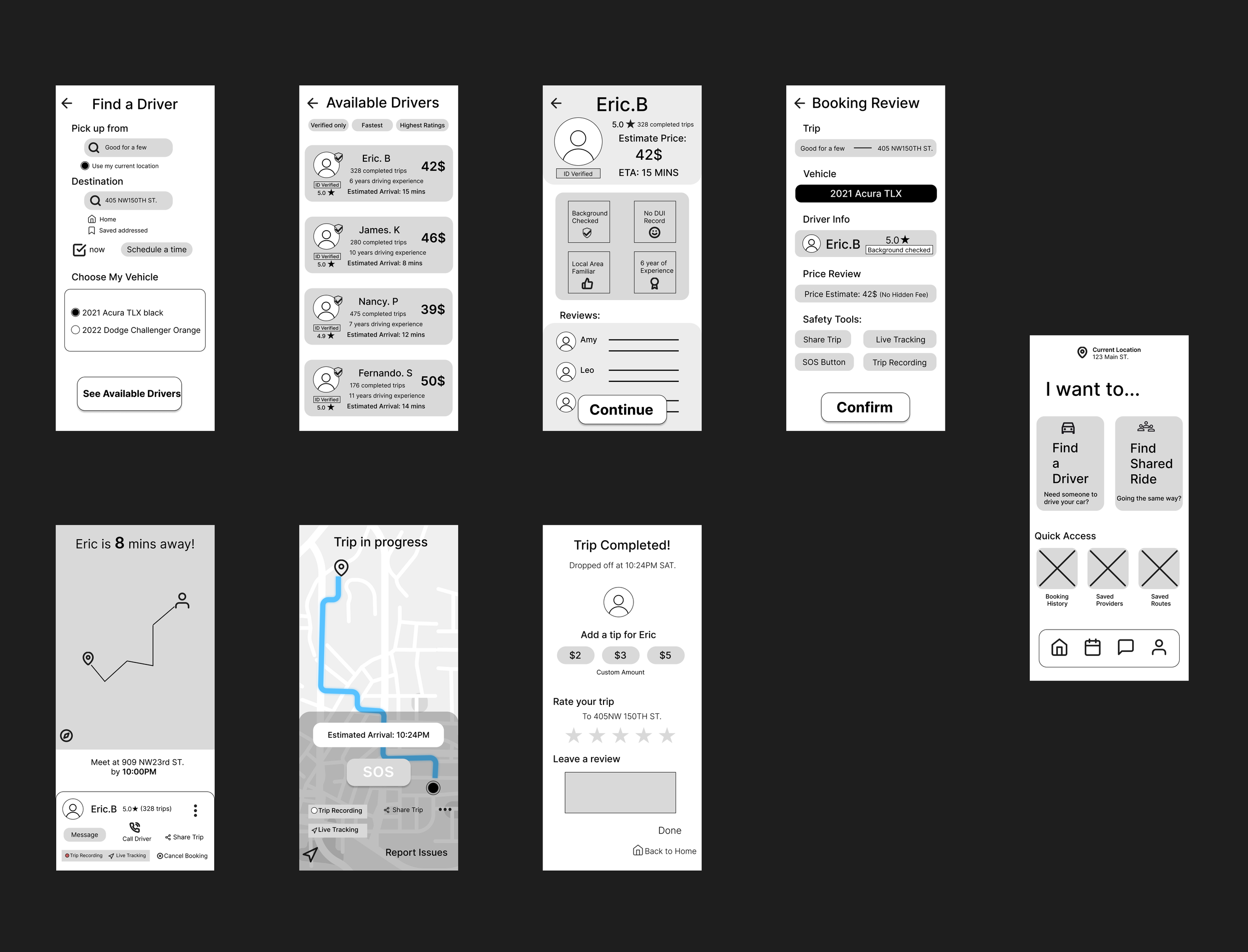
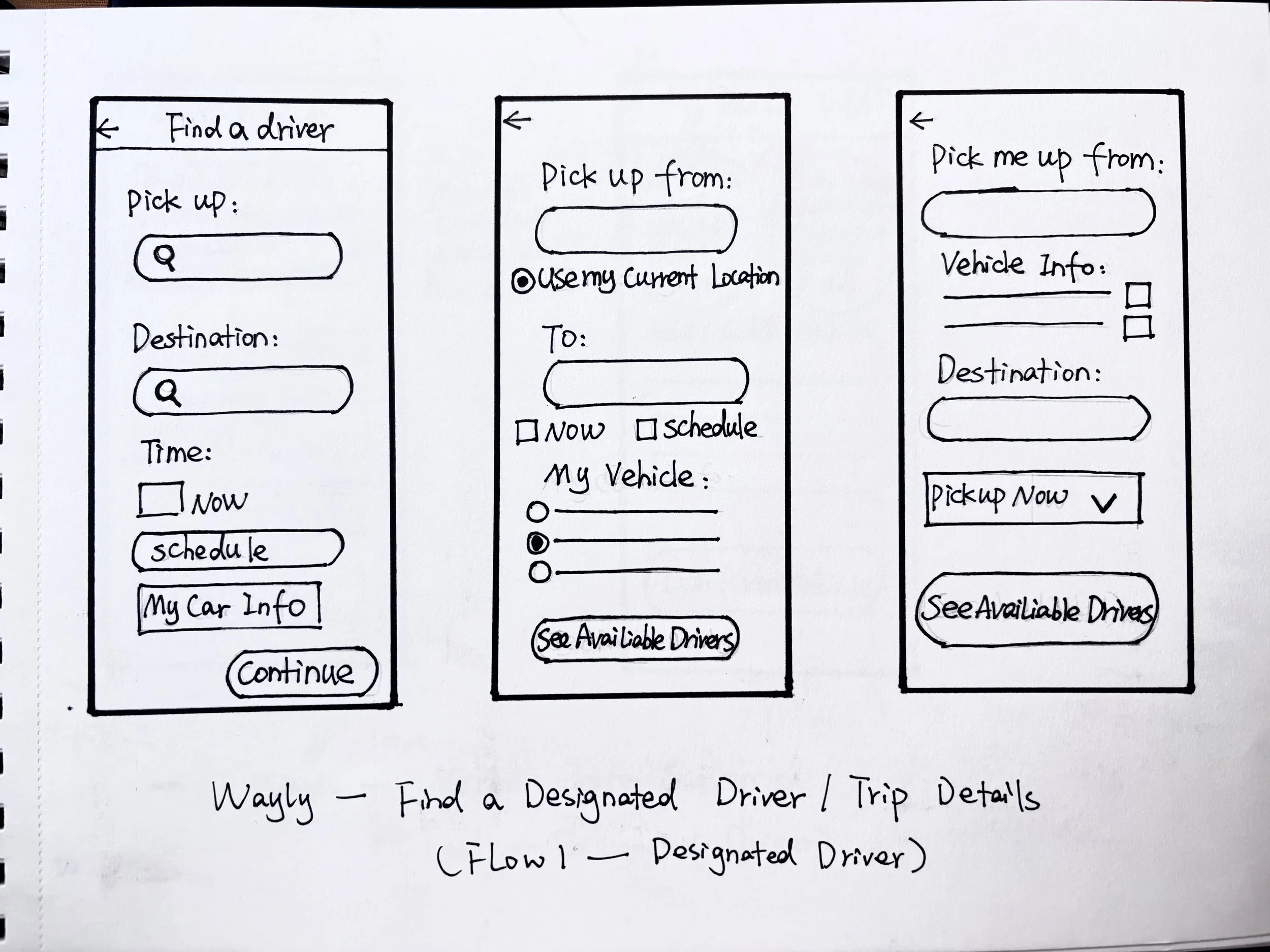
Flow 1 Designated Driver
Digital Wireframes:
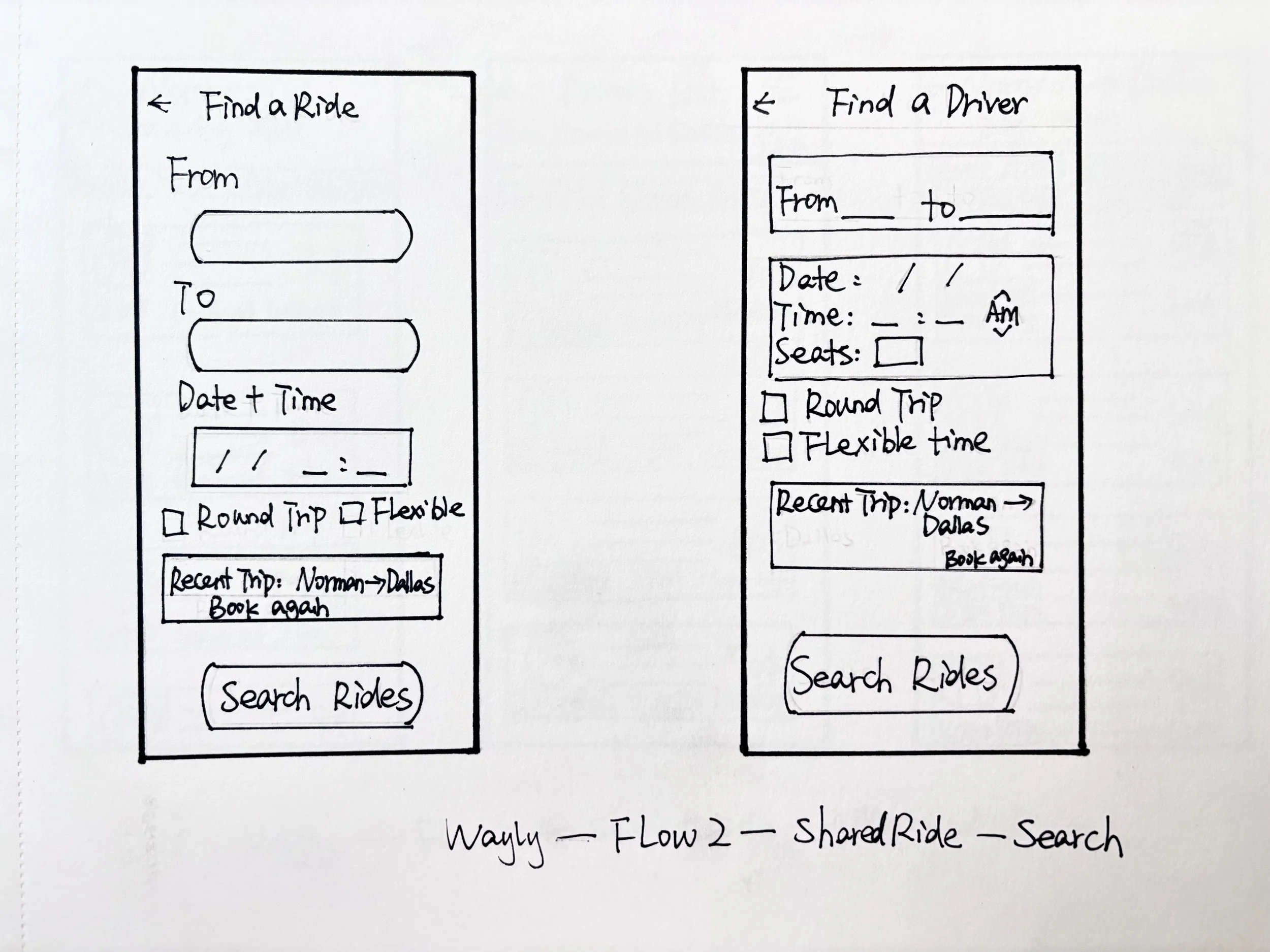
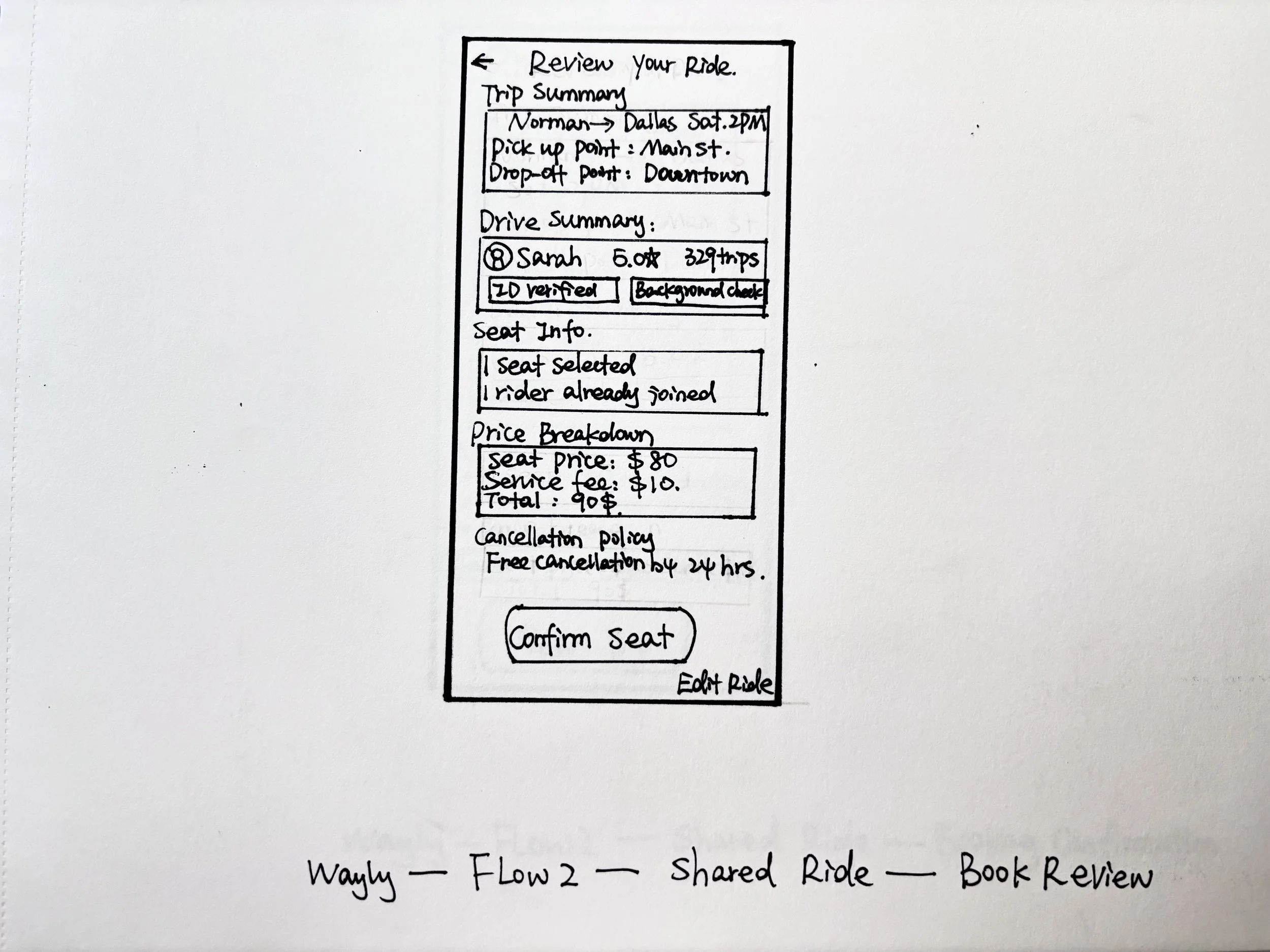
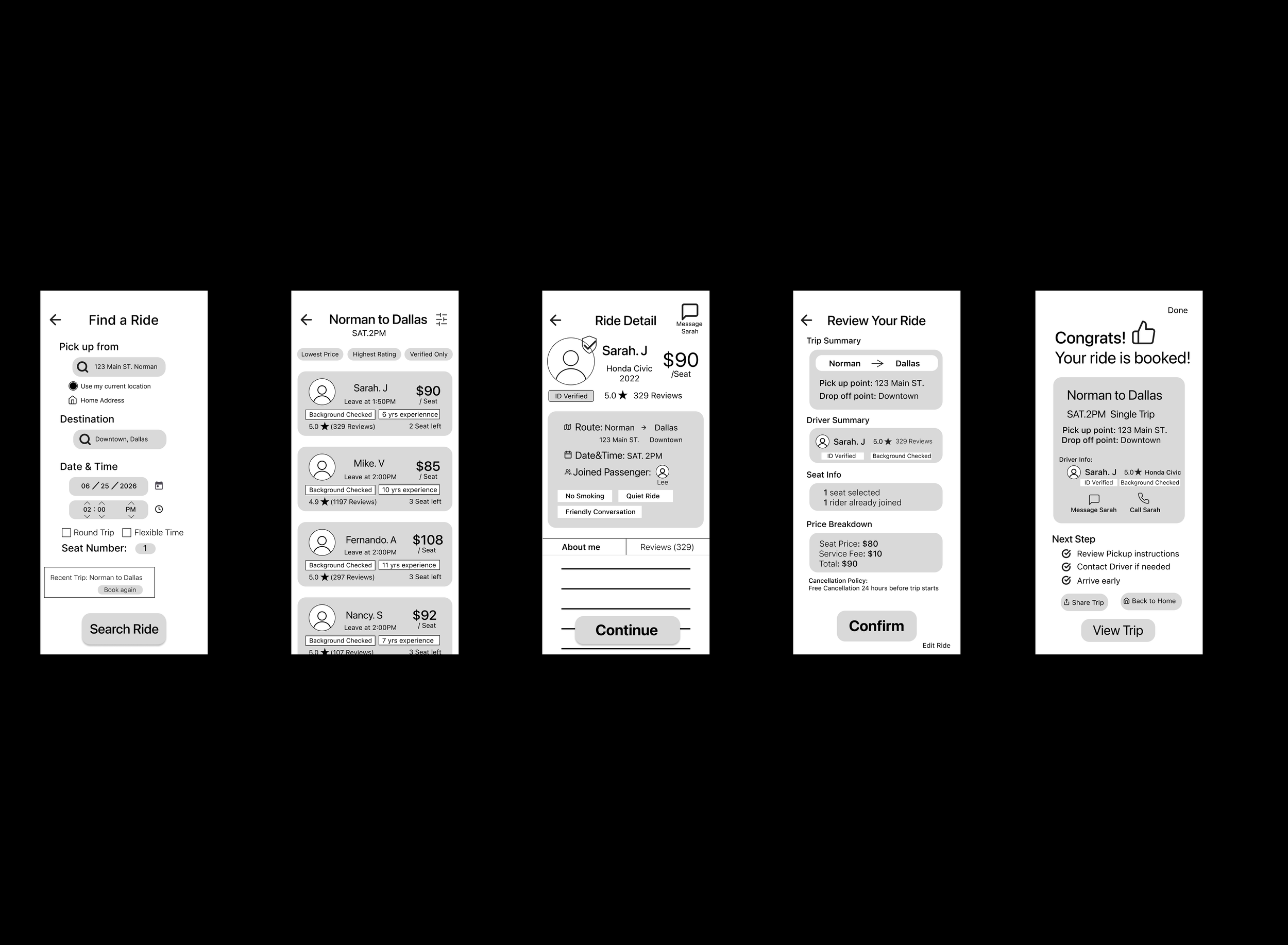
Flow 2 Shared Rides
Usability Study
I tested the low-fidelity prototype with users to evaluate whether they could understand Wayly’s two core services, complete the booking flows, and identify the information they needed to feel safe before confirming a ride.
Finding 1
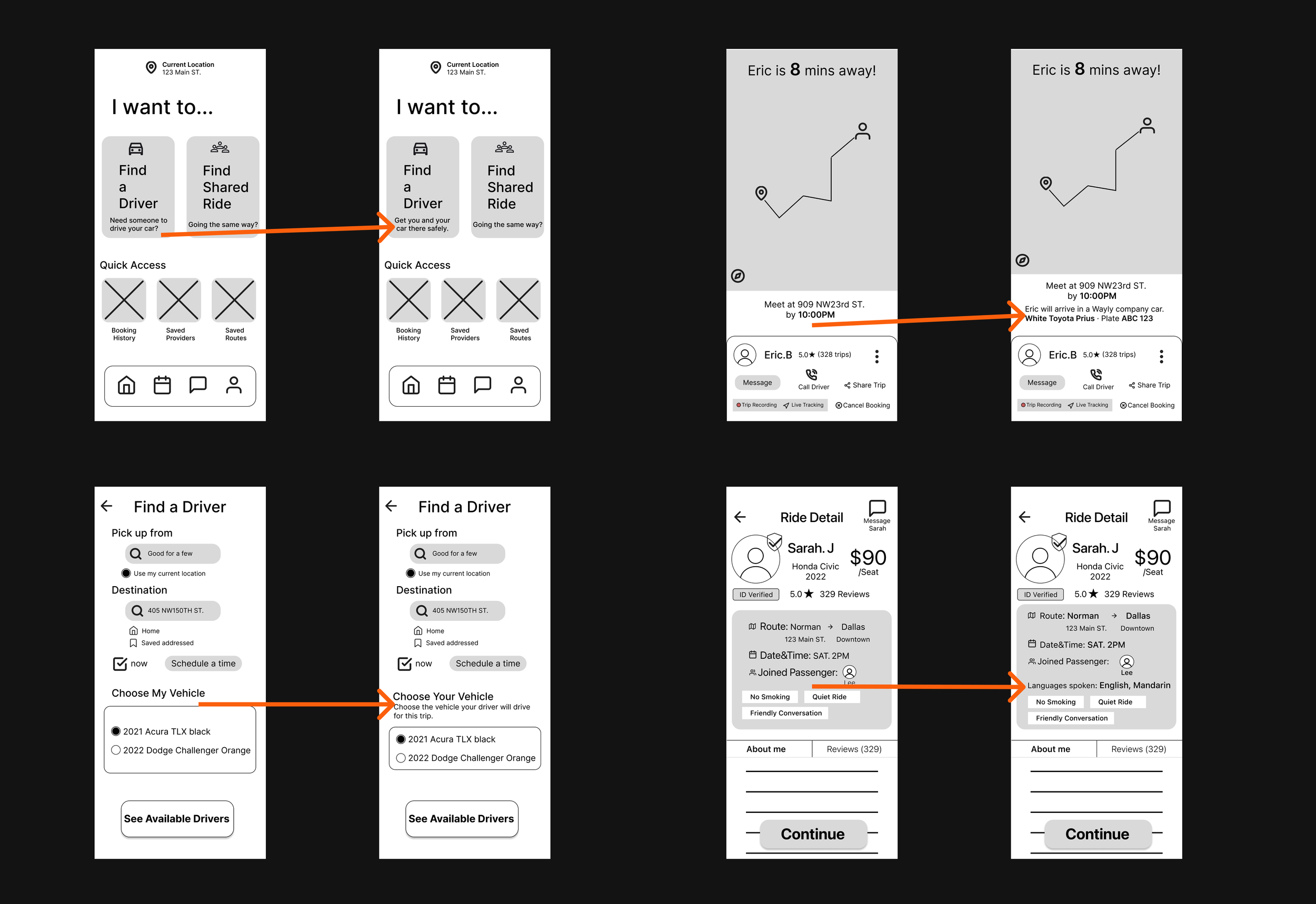
Users needed clearer value compared with regular rideshare.
A participant mentioned that some users might simply leave their car overnight and take Uber home. This showed that Wayly needed to clearly explain its unique value: helping both the user and their car reach the destination safely.
Finding 3
Pickup and drop-off details needed clearer labels.
Users were confused by unclear location wording in the booking review. I replaced vague location text with clear labels such as “Pickup” and “Drop-off.”
Study Type
Unmoderated usability study
Participants
6 participants
Prototype
Low-fidelity mobile prototype
Tasks
1. Book a designated driver
2. Find and book a shared ride
Finding 2
Vehicle selection was confusing.
Some users were unsure whether the listed vehicles belonged to the driver or the user. I revised the section to “Choose Your Vehicle” and added helper text explaining that the selected vehicle would be operated for this trip.
Shared ride users wanted more comfort and communication details.
For shared rides, users wanted language information and ride preferences to feel more comfortable before booking. I added languages spoken, joined rider information, and ride preference tags.
Finding 4
Users wanted to know how the driver would arrive.
A participant asked how they would identify the driver if the driver was coming to operate their car. I added arrival details, including that the driver would arrive in a Wayly company car with vehicle model and plate information.
Finding 5
Design Iterations / Before & After
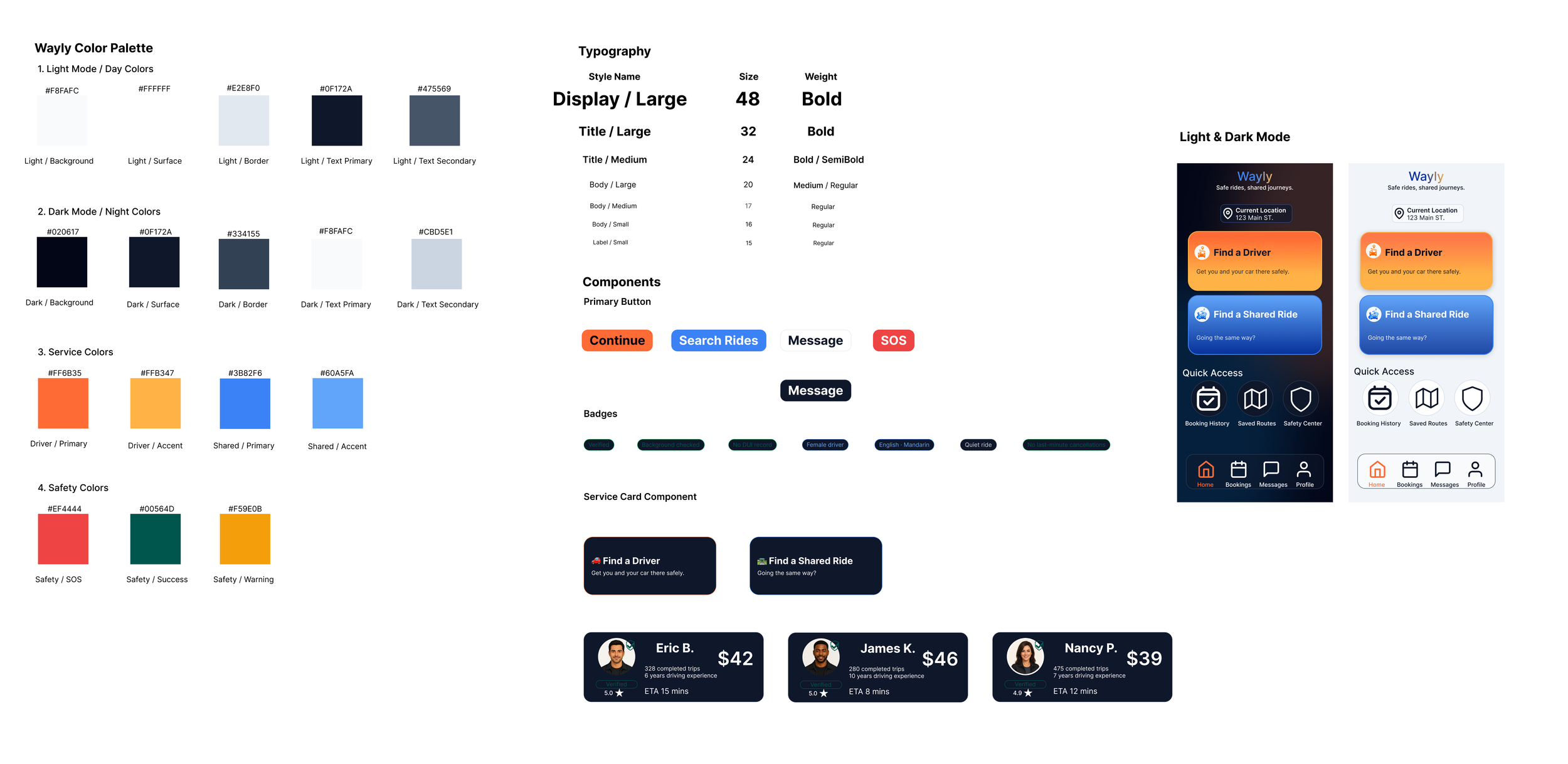
Design System / Visual Design
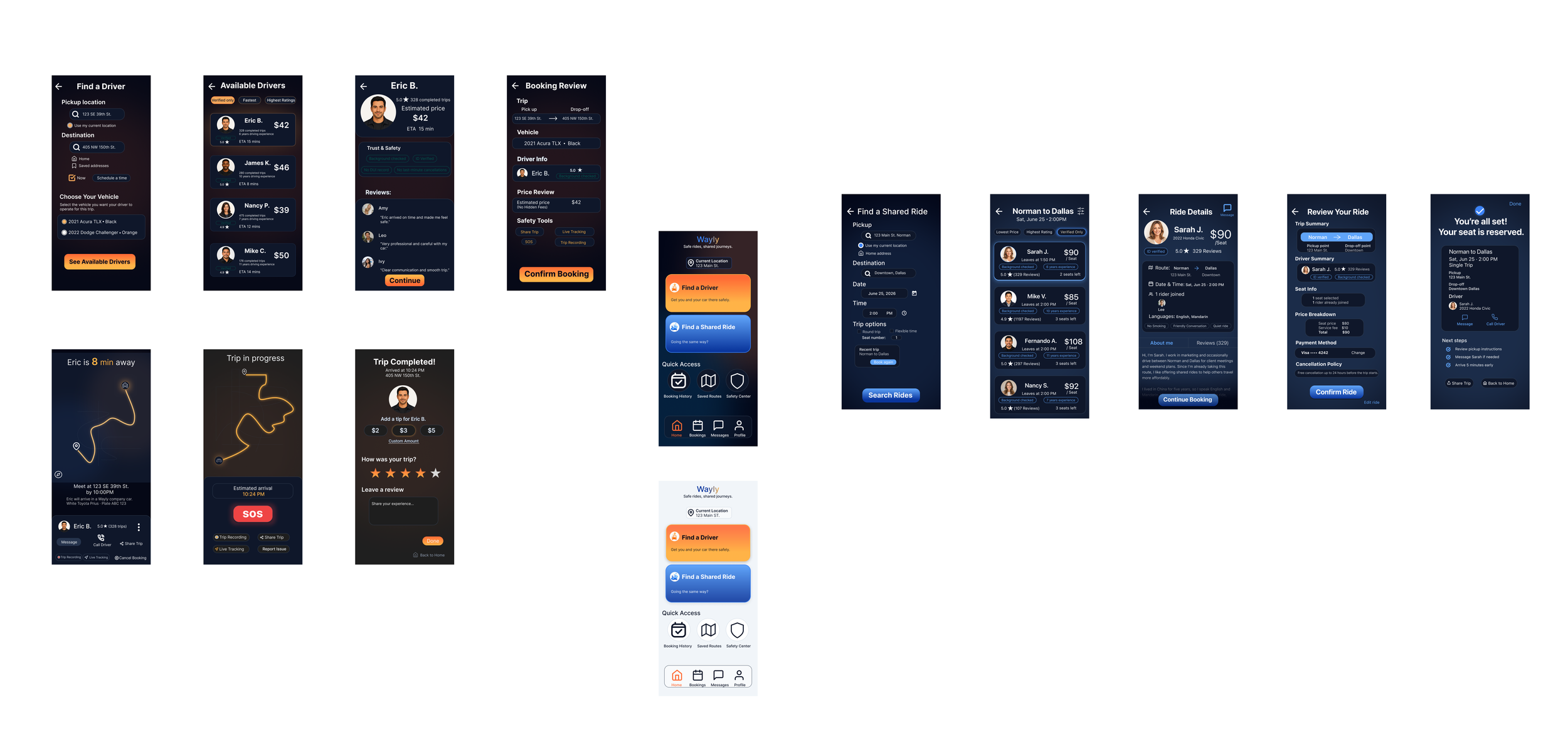
Final Design / High Fidelity Prototype
Accessibility Considerations
I considered accessibility throughout the design by focusing on readability, clear visual hierarchy, recognizable interaction patterns, and safety-related information that is easy to find during stressful travel moments.
1. Clear color meaning
Color was used consistently to separate the two core services: amber for designated driver interactions and blue for shared ride interactions. Important safety actions, such as SOS and trip sharing, were visually emphasized to help users find them quickly.
2. Readable dark interface
The dark-first interface was designed for nighttime travel contexts, with high-contrast text, large touch targets, and clear spacing to improve readability in low-light environments.
3. Safety information visibility
Safety tools such as live tracking, trip sharing, trip recording, driver verification, and emergency support were placed in visible areas so users could access them easily during the ride.
Key Takeaways
Wayly helped me explore how transportation design is not only about moving users from one place to another, but also about building trust, reducing uncertainty, and helping users feel safe before, during, and after a trip.
Takeaway 1
Trust needs to be visible.
Users were more confident when driver verification, background checks, ratings, reviews, and safety history were clearly shown before booking.
Next Steps
Takeaway 2
Service clarity matters.
Because Wayly includes both designated driver booking and shared rides, clear labels, simple explanations, and consistent service colors were important for helping users understand the difference between the two flows.
Takeaway 3
Safety is part of the full experience.
Safety features should not only appear during emergencies. Live tracking, trip sharing, driver contact, trip recording, and clear booking details all helped users feel more in control throughout the journey.
If I continued developing Wayly, I would further test the high-fidelity prototype with more users, especially people who frequently travel at night, students who use shared rides, and users without access to a personal vehicle. I would also explore stronger safety features, language filters, female driver preferences, and backup driver options for canceled trips.